This post contains affiliate links. If you buy through them, we may earn a commission at no extra cost to you. We research every pick from manufacturer specs, independent testing and verified owner reviews — read how we chose below.
A shop vac is the tool you buy after the mess, unless you read this first
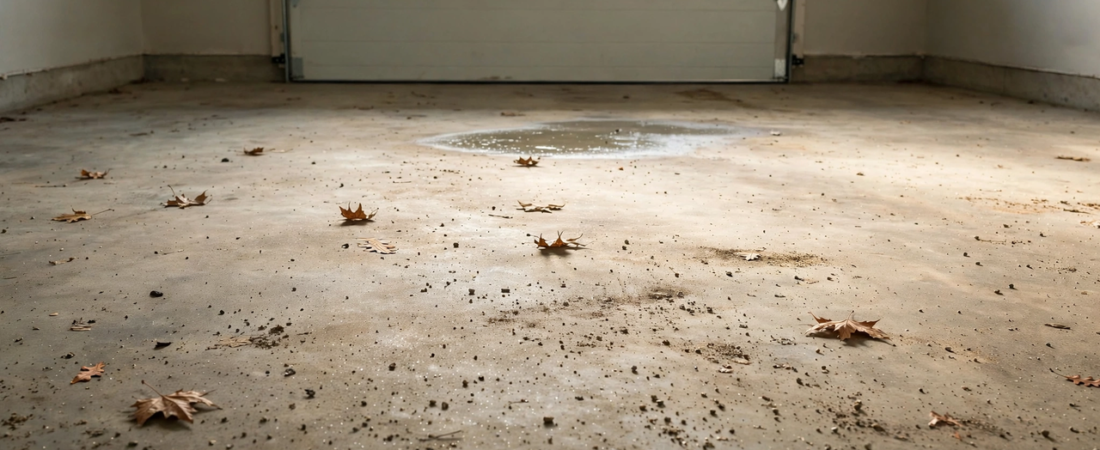
Every new homeowner meets the same three messes in the first year: water where water should never be, a garage floor wearing a winter of grit, and a renovation pile that laughs at a kitchen broom. A household vacuum dies on all three. A wet/dry shop vacuum is built for exactly them — it swallows screws, sawdust and standing water with the same hose, and it doesn’t apologize.
The problem is the box. Shop vacs are sold with the most misleading number in the tool aisle — “peak horsepower” — printed larger than the two numbers that actually predict how a vac cleans: airflow (CFM) and water lift. This guide ranks five vacs by role, using manufacturer specifications, independent lab and field testing, and patterns in verified owner reviews — and it teaches the sizing math first, so you can spot a wrong recommendation anywhere else. If the vac will live in the garage you’re still organizing, our Garage Organization guide is the natural companion read.
How we chose: Picks were selected from manufacturer spec sheets, independent testing (TechGearLab’s measured airflow/suction roundup, CNN Underscored’s hands-on best-shop-vac testing, Homeowner Basics’ 2026 spec comparison) and verified owner-review patterns. We don’t claim hands-on testing we didn’t do. Where a maker doesn’t publish a comparable figure, the comparison table says so instead of guessing. Prices are street ranges checked in October 2026 and move with promotions — check the current price on the product page.
Watch the guide
The 5 picks at a glance
| Role | Pick | Tank | Street price |
|---|---|---|---|
| Best overall / big cleanups | CRAFTSMAN 16-Gallon 6.5 Peak HP (CMXEVBE17595) | 16 gal | ~$130–$170 |
| Best for most garages | DEWALT 9-Gallon 5 Peak HP (DXV09PA) | 9 gal | ~$120–$170 |
| Best compact power | Vacmaster Beast 5-Gallon 5.5 Peak HP (VFB511H) | 5 gal | ~$100–$120 |
| Best budget | Stanley 6-Gallon 4 Peak HP (SL18116P) | 6 gal | ~$70–$90 |
| Best cordless | Milwaukee M18 2-Gallon (0880-20), tool only | 2 gal | ~$99–$149 |
Grab the free printable: our Shop Vac Sizing & Filter Chart (PDF) has this table plus the size-by-job guide and the filter cheat sheet.
First, the only sizing lesson that matters
Tank size is about how often you stop, not how strong the vac is. Gallons on the box are drum volume, not usable capacity — on wet pickup a float stops suction before the drum is truly full. Match the drum to the job:
- Cars, spills, small messes (2–6 gal): portability wins. You’ll actually carry it to the mess.
- Garage + renovation weekends (9–14 gal): the homeowner sweet spot — a full cleanup without three emptying trips.
- Floods, big shops, heavy debris (14–16+ gal): capacity and a 2-1/2 in. hose, at the price of storage space.
Then ignore peak HP and read these two numbers instead:
- CFM (airflow) — how much air the vac moves. It’s what carries dust, chips and light debris down the hose. Working bands from sizing guides: ~60–90 CFM handles light duty and car work, ~100–150 CFM is general garage range, 150+ CFM is heavy/dust-collection territory.
- Water lift (sealed suction, in inches) — how hard the vac pulls against resistance: a long hose, a loading filter, heavy wet debris. Higher lift = a vac that still pulls when the job fights back. Around 50 in. is entry level; 75 in. and up is strong for a utility vac.
Peak horsepower is measured on a motor test stand in a lab — it describes the motor alone, not what arrives at the end of your hose. Two vacs with the same “6.5 peak HP” badge can clean at completely different speeds, and independent tests prove it every year. Judge CFM and lift; treat HP as decoration.
Hose diameter is the third decision: 2-1/2 in. hoses swallow wood chunks and renovation rubble; 1-7/8 in. is the flexible middle; 1-1/4 in. is for cars, dust and smaller debris — and clogs on chunks. Pick the hose for your worst mess, not your average one.
1. Best overall / best for big cleanups: CRAFTSMAN 16-Gallon (CMXEVBE17595) ⭐
If one vac has to cover the whole house’s worst days, this is the consensus pick — TechGearLab’s best overall, and the fastest machine in its dry and wet floor-cleaning tests. The formula is simple: a 16-gallon drum, the category’s big 2-1/2 in. × 7 ft Dual-Flex hose, a built-in rear blower port for clearing the driveway and the shop floor, and an oversized tank drain so emptying 10 gallons of water is opening a cap, not deadlifting a drum. The Qwik-Lock cartridge filter changes without tools, it ships with the full nozzle set (utility, wet, car, two wands, a dust bag), and it’s backed by a 3-year limited warranty — the longest class in this guide, shared with the DEWALT.
Honest trade-offs: it’s a big object. It wants a garage corner, not a closet, and in independent sound measurements the big corded vacs are loud machines whatever the box rating says — hearing protection on long sessions is the grown-up move. And if your reality is cars and occasional spills, this is more vac than you’ll ever use; picks 3–5 exist for you.
2. Best for most garages: DEWALT 9-Gallon (DXV09PA)
Nine gallons is where “big enough for a real mess” meets “still easy to roll out, carry up a step, and store.” The DEWALT pairs that size with the strongest published suction figure in this guide — 85 inches of water lift (the manufacturer’s published figure) — a crush-resistant 1-7/8 in. × 7 ft hose, rubberized casters, a tank drain, a blower function, and the nicest accessory logistics here: a removable accessory bag that keeps the wands, nozzles, round brush and inflator kit with the machine instead of in a lost drawer. Also 3-year warranty class.
Noise-sensitive? DEWALT sells a sibling, the STEALTHSONIC DXV09P-QTA, marketed at under 65 dB — roughly half the perceived noise — with 90-CFM-class airflow. It costs more than the standard model; for a workshop under a bedroom, it’s the version to price first.
Honest trade-offs: the 1-7/8 in. hose is the middle size — it will clog on the chunky rubble the Craftsman’s 2-1/2 in. hose eats. The standard (non-StealthSonic) version is a normally loud shop vac. And on promo weeks its price can overlap the 16-gallon Craftsman, at which point buy the size your storage allows, not the badge.
3. Best compact power: Vacmaster Beast 5-Gallon (VFB511H)
The Beast is the answer to “I have no room for a big vac but my messes are not small.” It’s a 5-gallon box, about 14 pounds, with full-size numbers: 5.5 peak HP, 320 air watts, 82 inches of water lift, and in CNN Underscored’s hands-on testing, 102 CFM — enough to clear its screw-and-litter test in seconds and pull 2 gallons of water in about 10 seconds. Two storage details make owners love it: everything — hose, cord, all 9 accessories — stores on the machine, and its 18 ft power cord (25 ft of total reach) was the longest CNN tested, so it reaches across a garage without an extension cord. Its cartridge + bag pairing captures fine dust down to 1 micron, the best filtration story in this guide — the pick if you’ll hook it to a sander from the Essential Tools kit.
Honest trade-offs: power isn’t the limit, capacity is — 5 gallons fills fast on a flood or a heavy planer session, and there’s no tank drain: you lift and pour. The fine-dust performance also depends on using the bag with the cartridge, which means a small ongoing consumable cost the bigger vacs make optional.
4. Best budget: Stanley 6-Gallon (SL18116P)
The Stanley is proof that the entry price can still buy a real shop vac: 6 gallons, 85 CFM on the spec sheet, a blower port, swivel casters, and a full accessory set (wands, crevice, gulper and floor nozzles, cartridge filter and a dust bag) for roughly $70–$90 — about half the Craftsman. TechGearLab named it its Best Budget pick after measuring airflow that embarrassed larger cheap vacs (~102 CFM calculated in its test setup).
Honest trade-offs: the spec sheet’s other number tells the rest — 50 inches of water lift, the lowest here, so it works harder on heavy wet pickup and long hose runs; the 1-1/4 in. hose is sized for dust, grit and car work, not renovation chunks; and in independent floor tests it was simply slower than the big machines (that’s the money you saved). Warranty is the short class (~1 year in roundup tables). For a first vac doing garage-and-car duty, none of that is a dealbreaker — just buy it with the right job in mind.
5. Best cordless: Milwaukee M18 2-Gallon (0880-20) — tool only
For the messes that happen far from an outlet — the attic hatch, the crawl space, the car in the driveway, the spill on the stairs — a cordless vac you’ll actually grab beats a stronger vac you won’t unroll. Milwaukee’s M18 2-gallon is the established platform pick: 45 CFM and 32 inches of water lift, a toolbox-shaped body with onboard accessory storage, a 1-1/4 in. × 6 ft hose, and a certified HEPA filter for dry work. If your drill and driver already run on M18 batteries, this slots into your life for the price of the bare tool.
Honest trade-offs, stated plainly: tool only means no battery and no charger in the box — for anyone outside the M18 platform, the real entry price is far above the listing, and a corded pick above is better value. The performance is cordless-class: a fraction of the corded picks’ airflow and lift, and runtime depends entirely on the battery size you click in. This is a grab-and-go vac for quick jobs — it is not your flood vac and not your renovation vac. Its HEPA filter is a washable wet/dry design that does not need to be swapped between wet and dry jobs — just let it air-dry after water work.
Full comparison
| Craftsman 16 ⭐ | DEWALT 9 | Vacmaster Beast 5 | Stanley 6 | Milwaukee M18 2 | |
|---|---|---|---|---|---|
| Price | ~$130–$170 | ~$120–$170 | ~$100–$120 | ~$70–$90 | ~$99–$149 (tool only) |
| Tank | 16 gal | 9 gal | 5 gal | 6 gal | 2 gal |
| Airflow | Top of TechGearLab’s test group | Not published comparably | 102 CFM (CNN test) | 85 CFM (mfr) | 45 CFM |
| Water lift | Not published comparably | 85 in. (mfr) | 82 in. | 50 in. | 32 in. |
| Emptying water | Oversized drain | Tank drain | Lift & pour | Lift & pour | Lift & pour |
| Reach | Corded | 10 ft cord | 18 ft cord / 25 ft reach | 10 ft cord / ~16 ft reach | Cordless |
| Warranty | 3-year limited | 3-year class | Check listing | ~1-year class | Platform tool class |
Two cells say “not published comparably” on purpose: not every maker releases CFM and lift measured the same way, and a buying guide that invents parity isn’t a guide. Where independent testers measured several of these machines side by side, the Craftsman led on cleaning speed and the Beast led the compacts — which is exactly how they’re ranked here.
Wet pickup and filters: the 5-minute education that saves motors
- Dry debris: cartridge filter in, and use a filter bag for anything fine — the bag is the cheap consumable that protects the expensive filter and keeps suction up as it fills.
- Fine dust (drywall, concrete, ash-cold only): bag plus a fine-dust/HEPA-class cartridge, always both. This is also the dust-collection setup when the vac hooks to a sander or miter saw — and the reason airflow under filter load (water lift) matters more than the box number.
- Wet pickup: for a small spill, the standard filter can stay (RIDGID’s official guidance allows small amounts). For real water, remove the paper filter and bag and fit the foam sleeve — a soaked paper filter chokes airflow, mists out the exhaust, and dies. The float will cut suction when the drum reaches its wet limit; that’s the machine protecting its motor, not a defect.
- After water: the shop vac is the first 10 minutes of a water event, not the whole fix — it removes standing water, and then the room’s humidity is a dehumidifier’s job (our Damp Basement guide covers that system end to end).
A note on the orange alternative: if you shop at Home Depot anyway, RIDGID’s 14-gallon class (the current HD1400, successor to the discontinued WD1450) is a genuinely strong 165-CFM-class machine with the same drain/blower formula. It’s excluded from the ranked five only because it’s primarily a Home Depot-channel product with thin Amazon availability — not because it cleans worse.
The verdict: which one is yours?
- One vac for everything, storage be damned: Craftsman 16-gallon.
- The balanced garage vac most homeowners should buy: DEWALT 9-gallon (STEALTHSONIC version if noise matters).
- Small garage, serious messes, sander hookups: Vacmaster Beast 5-gallon.
- First vac, cars and garage floors, tightest budget: Stanley 6-gallon.
- Already own M18 batteries, need grab-and-go: Milwaukee M18 2-gallon.
FAQ
What size shop vac do I need?
Match the drum to the job, not the house: 2–6 gallons for cars, spills and small messes; 9–14 gallons for garage and renovation weekends; 14–16+ gallons for floods and big debris. Remember the box number is drum volume — wet capacity is lower, because a float stops suction before the drum is full.
How much horsepower do you need in a shop vac?
Less than the box wants you to think. “Peak HP” is a laboratory motor rating, not cleaning power at the hose. Judge a vac on airflow (CFM) and water lift instead: roughly 100–150 CFM with 65+ inches of lift covers general home and garage work; heavy dust collection wants 150+ CFM and high lift to pull through a loading filter.
What is a good CFM for a shop vac?
About 60–90 CFM is fine for light duty and car interiors, 100–150 CFM is the general garage sweet spot, and 150+ CFM is where heavy debris and tool dust collection get comfortable. Compare CFM only alongside water lift — a high-CFM vac with weak lift fades as soon as the filter loads.
Can I vacuum water with the filter in?
For a small spill, yes — manufacturers (RIDGID’s FAQ, for example) allow small amounts with the standard filter in place. For any real volume of water, remove the paper filter and filter bag and use the foam sleeve: a saturated paper filter blocks airflow, can mist from the exhaust, and is ruined. One exception in this guide: the Milwaukee M18’s filter is a washable wet/dry design that can stay in for water — just let it dry afterwards.
Do I need filter bags, or are they a scam?
They’re the cheapest insurance in the system. A bag catches the debris before it cakes the cartridge filter, so suction stays consistent longer and the cartridge — the pricier part — lasts. For fine dust like drywall, bag + fine-dust cartridge together is the correct setup, not an upsell.
Can a shop vac replace a dust collector?
For one small tool at a time — a sander, a miter saw — yes, a strong shop vac (high CFM and high lift, with the bag + fine filter setup) is the normal homeowner answer. For a planer or a multi-tool shop running all day, a real dust collector moves air volumes no shop vac matches. The Beast and the Craftsman are this guide’s dust-collection picks, in that order of size.
Which shop vac is better, Ridgid or Craftsman?
The two default names in this category, with near-identical formulas — big drum, tank drain, blower port. RIDGID’s 14-gallon class (the current HD1400, a ~165-CFM-class machine) is genuinely strong, but it’s sold mainly through Home Depot with thin Amazon availability, which is why it’s a note in this guide rather than a ranked pick. Our Craftsman 16-gallon matches the formula, led independent floor-cleaning tests, and is easy to buy and warranty through Amazon. If you already shop at Home Depot, the RIDGID won’t disappoint you; everyone else, take the Craftsman.
Which shop vacuum has the strongest suction?
“Suction” is water lift — how hard the vac pulls against resistance. In this guide the strongest published figures are the DEWALT’s 85 inches and the Vacmaster Beast’s 82 inches. Just don’t shop on lift alone: airflow (CFM) is what actually carries debris down the hose, and the fastest-cleaning machines pair high lift with high CFM.
Can I use a shop vac as a regular vacuum?
You can — on hard floors, garages, workshops and cars, it’s excellent. As your only indoor vacuum it’s a compromise: there’s no rotating brush to work carpet pile, it’s loud, it’s heavy, and unless you run the fine bag + cartridge setup, the exhaust filtration is coarser than a household vacuum’s. Most owners keep both: the household vac for carpets, the shop vac for everything wet, dirty or chunky.
What are the two holes for on a shop vac?
One is the intake port — that’s where suction happens. The other is the exhaust port: move the hose to it and the same motor becomes a blower, for clearing leaves, dust and the driveway. That second port is the “blower function” listed on several picks in this guide.
What happens if you run a shop vac with no filter?
Don’t. On dry work, fine dust passes straight through, blows out the exhaust and coats the motor — the filter is motor protection, not an accessory. For water, the paper filter comes out but the foam sleeve goes on; “no filter at all” is never the correct setup, wet or dry.
What’s the free sizing & filter chart?
A one-page PDF with the comparison table, the size-by-job guide, and the filter cheat sheet (dry / fine dust / wet — what stays in, what comes out). Download the Shop Vac Sizing & Filter Chart (PDF)
Read next: Garage Organization for Beginners · How to Fix a Damp Basement · Essential Tools for New Homeowners